Wellness Business Opportunities in Nigeria: Ideas to Start and Grow
Wellness business opportunities are becoming increasingly attractive to entrepreneurs who want to build businesses around healthy living, wellness education, personal care, natural products, fitness, preventive lifestyle practices and related services.
The wellness industry provides opportunities for different types of entrepreneurs. You do not necessarily need to manufacture a product or operate a large health facility to participate in the sector.
You could build a business around wellness products, provide a wellness service, sell health-related equipment, educate an audience, develop a digital health business, or combine several complementary activities.
The key is to identify an opportunity that matches your skills, resources, target market and long-term business goals.

What Are Wellness Business Opportunities?
Wellness business opportunities are businesses, services, products and income-generating activities connected with helping people improve or maintain aspects of their well-being.
They can include areas such as:
- Wellness products
- Natural health products
- Nutrition and healthy living
- Fitness and exercise
- Massage and relaxation services
- Wellness equipment
- Health education
- Digital wellness information
- Personal development
- Wellness coaching
- Membership-based wellness services
- Health and wellness retail
- Network marketing
- Wellness content and information products
The wellness industry is broad, which means you can choose a business model based on your particular interests and capabilities.
Why Consider a Wellness Business?
Wellness is not simply about selling products. It is a broad field built around people's continuing interest in improving their quality of life.
A wellness business can therefore combine products, services, education and community.
For an entrepreneur, this creates several possible ways to generate revenue.
For example, one business could provide wellness education while also selling appropriate wellness products. Another might combine massage services with wellness equipment. A digital entrepreneur might create educational content, courses, books or consultations.
The opportunity is to identify a genuine need and develop a business that provides useful value.

Wellness Business Opportunities to Explore
There is no single best wellness business for everyone. The right opportunity depends on your experience, interests, available capital, location and target customers.
Here are some of the areas worth exploring:
1. Wellness Products Business
Selling wellness products can be one of the simplest ways to enter the wellness market.
Depending on your business model and applicable regulations, products may include:
- Nutritional products
- Herbal products
- Wellness supplements
- Personal-care products
- Wellness accessories
- Natural lifestyle products
The important thing is to choose products carefully and understand what you are legally permitted to sell and how they should be marketed.
A successful wellness-products business should focus on customer needs rather than exaggerated health claims.
What makes this opportunity attractive?
You can potentially start with a focused product range rather than attempting to sell everything.
You can also combine product sales with educational content that helps customers understand how to make informed wellness choices.
2. Natural Health Business
Natural health is another area that can provide opportunities for entrepreneurs with appropriate knowledge, training and regulatory authorisation.
Possible activities may include:
- Natural wellness consultation
- Herbal product retail
- Wellness education
- Lifestyle guidance
- Traditional wellness services
- Natural health information products
However, anyone operating in this area should understand the distinction between wellness education and medical practice and comply with applicable Nigerian laws and professional requirements.
Avoid making claims that a product or service can diagnose, treat or cure a disease unless you have the appropriate authority and evidence to support such claims.
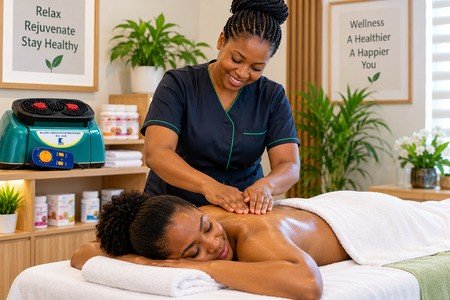
3. Massage and Wellness Services
Massage and related wellness services can provide a practical local business opportunity.
Depending on your training and business model, possibilities may include:
- Massage services
- Foot massage
- Relaxation services
- Wellness centres
- Mobile massage services
- Corporate wellness services
- Massage equipment sales
- Massage equipment demonstrations
This type of business can also be combined with wellness products and membership programmes.
For someone who prefers a service-based business rather than product sales, this may be an interesting direction to investigate.
4. Wellness Equipment Business
Wellness equipment provides another possible business model.
Entrepreneurs can explore the sale, distribution, demonstration or servicing of appropriate wellness equipment.
Examples may include:
- Massage equipment
- Foot-care equipment
- Wellness machines
- Home-use wellness devices
- Massage chairs
- Exercise equipment
Equipment businesses often require more attention to product quality, customer education, after-sales support and logistics than simple retail.
However, they can create opportunities for both product sales and service-based businesses.
5. Health and Wellness Membership Business
Membership models can provide a different approach to building a wellness business.
Instead of relying entirely on individual transactions, a membership programme can provide customers with ongoing access to selected services, education, discounts or wellness resources.
Possible membership benefits could include:
- Wellness consultations
- Educational sessions
- Discounts on selected products
- Massage or wellness services
- Health education
- Member-only resources
- Community support
The membership must provide genuine value. Customers should understand exactly what they are paying for and what they receive in return.
6. Wellness Coaching and Education
If you have useful knowledge and communication skills, education itself can become a business.
Possible formats include:
- Wellness coaching
- Workshops
- Seminars
- Online courses
- One-to-one consultations
- Group programmes
- Educational books
- E-books
- Wellness guides
Education-based businesses can be particularly attractive because knowledge can potentially be delivered both locally and online.
However, wellness educators should clearly define their scope of practice and avoid presenting themselves as medical professionals when they are not.
7. Health and Wellness Information Products
Your knowledge can also be transformed into information products.
Examples include:
- E-books
- Guides
- Checklists
- Online courses
- Training programmes
- Webinars
- Membership resources
- Educational videos
An information-product business can complement another wellness business.
For example, someone selling wellness products could create an educational guide that answers common questions from customers.
This can help establish expertise while creating an additional revenue stream.
8. Network Marketing Business
Network marketing is another business model used by some companies in the health and wellness sector.
In this model, independent distributors may sell products directly to customers and, depending on the company's compensation structure, develop a sales organisation.
Network marketing should be approached as a business rather than as a guaranteed route to wealth.
Before joining any company, investigate:
- The products
- Company history
- Pricing
- Customer demand
- Compensation plan
- Registration costs
- Refund policies
- Regulatory requirements
- Distributor responsibilities
- Actual business expenses
The ability to recruit should not be the only reason for joining an opportunity. A sustainable business should have genuine products or services and real customer demand.
9. Wellness Content and Digital Marketing
The wellness industry also creates opportunities for people with digital skills.
You could build a business around:
- Wellness blogging
- SEO content
- Social media management
- Wellness website development
- Email marketing
- Video content
- Digital advertising
- Online community management
A wellness practitioner who learns digital marketing can use these skills to promote their own business.
A digital marketer can also specialise in helping health and wellness businesses attract customers online.
This creates an important connection between wellness entrepreneurship and digital business development.
How to Choose the Right Wellness Business Opportunity
With so many possibilities, the challenge is not simply finding an idea.
The challenge is finding an idea that fits you.
Before starting, consider the following questions.
What Skills Do You Already Have?
Your existing skills can reduce the learning curve.
For example:
- A trained massage practitioner may be suited to a massage business.
- A salesperson may enjoy wellness-product distribution.
- A writer may develop wellness information products.
- A digital marketer may help wellness businesses grow online.
- An educator may develop courses or workshops.
Start with your strengths, then identify the skills you need to develop.
Who Is Your Target Customer?
Do not try to serve everybody.
Define the people you want to help.
Your audience might be:
- Working professionals
- Families
- Older adults
- Fitness enthusiasts
- Wellness-conscious consumers
- Corporate organisations
- Health practitioners
- Beauty and personal-care businesses
- People interested in natural wellness
Understanding your audience will influence your products, services, pricing and marketing.
How Much Can You Invest?
Different wellness businesses require different levels of investment.
A digital information business may require relatively little physical infrastructure.
A wellness centre, equipment business or retail operation may require considerably more capital.
Consider:
- Startup costs
- Equipment
- Inventory
- Rent
- Transportation
- Marketing
- Website development
- Professional training
- Licences and registrations
- Insurance where applicable
- Ongoing operating expenses
Do not confuse low startup cost with low business risk.
Is There Real Customer Demand?
An attractive business idea is not necessarily a profitable business.
Research your potential customers.
Find out:
- What problems do they have?
- What are they currently buying?
- What alternatives already exist?
- How much are they willing to pay?
- Where do they look for solutions?
- What complaints do they have about existing providers?
Good market research can prevent you from investing heavily in an idea that has little demand.
Start With a Specific Wellness Problem
One of the most useful principles in wellness entrepreneurship is to focus on a specific customer problem.
Instead of saying:
"I want to start a wellness business.
"What specific wellness need can my business serve?"
ask:
For example:
General idea:
Wellness products
More specific:
Wellness products for busy Nigerian professionals interested in healthy living.
Or:
General idea:
Massage business
More specific:
Convenient massage and relaxation services for professionals in a particular location.
The more clearly you define the customer and problem, the easier it becomes to develop your offer and marketing message.
Combine Products, Services and Education
A wellness business does not always have to depend on one source of revenue.
You can potentially create a business ecosystem around a particular audience.
For example:
Education → Consultation → Product → Membership → Follow-up
A customer might first discover your educational content, become interested in a consultation, purchase an appropriate product or service, and later join a membership programme.
This approach can create a more complete customer journey.
However, every component should provide genuine value rather than being added to increase sales.

Build Your Wellness Business Online
A professional online presence can make a significant difference to a modern wellness business.
Your website can serve as the central location for your:
- Business information
- Services
- Products
- Educational content
- Customer enquiries
- Testimonials
- Frequently asked questions
- Contact information
- Lead-generation activities
Search engine optimisation can help people discover your content when they search for information related to your business.
Social media can help you distribute that content and communicate with your audience.
WhatsApp can provide a convenient channel for enquiries and customer communication.
Together, these tools can form a practical digital marketing system.
Why a Website Matters
A social media account can help you reach people, but your website gives you a more permanent digital presence.
A well-structured wellness business website can:
- Explain what you offer.
- Build credibility
- Answer customer questions
- Attract Google search traffic.
- Capture enquiries
- Showcase your expertise
- Promote products and services.
- Support your social media marketing.
- Build an audience over time.
This is especially important for wellness businesses that depend on education and trust.
Common Mistakes in Wellness Businesses
Starting a wellness business without adequate preparation can create unnecessary problems.
Avoid these common mistakes:
Trying to sell everything
A large product catalogue does not automatically create a successful business.
Start with a clear target market and focused offer.
Making exaggerated health claims
Do not promise that a product, supplement, herb, device or service will cure a disease without appropriate scientific and regulatory support.
Ignoring regulations
Health and wellness businesses may be subject to specific laws, professional requirements, product regulations and advertising restrictions.
Understand the requirements applicable to your particular business.
Focusing only on sales
Education and customer service are important parts of building trust.
Starting without a marketing plan
A good product still needs to be discovered by potential customers.
Plan how people will find you.
Spending too much too early
Test your business idea before committing large amounts of money.

How to Start a Wellness Business in Nigeria
A practical starting process could look like this:
Step 1: Choose a specific market
Decide who you want to serve.
Step 2: Identify a customer need
Find a genuine problem or unmet need.
Step 3: Select your business model
Choose between products, services, education, equipment, membership, digital business or a combination.
Step 4: Research the market
Study competitors, pricing, demand and customer behaviour.
Step 5: Check legal and regulatory requirements
Determine the registrations, licences, product approvals, professional requirements and advertising rules relevant to your business.
Step 6: Develop your offer
Define exactly what you will provide and why customers should choose you.
Step 7: Build your online presence
Create a professional website and establish appropriate digital channels.
Step 8: Create useful content
Answer the questions your target customers are already asking.
Step 9: Start marketing
Use appropriate channels such as Google search, social media, email and WhatsApp.
Step 10: Measure and improve
Track enquiries, customers, sales, expenses and other meaningful business metrics.
Wellness Business Opportunities and the Future of Health Entrepreneurship
The wellness industry provides opportunities beyond traditional product selling.
The modern wellness entrepreneur can combine:
Knowledge + Products + Services + Technology + Marketing
That combination can create businesses that are more adaptable and customer-focused.
For Nigerian entrepreneurs, the opportunity is particularly interesting because many wellness businesses can serve customers both locally and online.
You do not necessarily need to build a large company immediately.
You can start with one clearly defined offer, learn from your customers and expand gradually.
Explore Wellness Business Opportunities
There is no single "best" wellness business opportunity.
The best opportunity for you depends on your:
- Skills
- Experience
- Interests
- Available capital
- Location
- Target market
- Business goals
- Ability to provide genuine value
The important thing is to choose carefully rather than following every new business trend.
At NigeriaWebSuccess, we explore health business, wellness entrepreneurship and digital marketing strategies that can help entrepreneurs build more professional and sustainable businesses.
Explore the opportunities that best match your skills and goals, then develop a clear plan for turning your chosen idea into a real business.
Related Wellness Business Opportunities Resources
- Network Marketing Business
- How to Succeed at Network Marketing
- Kedi Healthcare Products
- Health Club Membership in Nigeria
- Massage Business Opportunity
- Health Business Startup Ideas in Nigeria
- How to Grow Your Health Business Online
- Health Business Website
Get Help Developing Your Wellness Business
If you already operate a health or wellness business—or are considering starting one—you may need help deciding what to offer, who to target, and how to attract customers online.
Phone / WhatsApp: +234 803 320 5456 | +234 812 132 5411
Website: www.nigeriawebsuccess.com
Explore our wellness business opportunities and digital marketing resources to build your expertise, establish your online presence, and attract the right audience.

Dr. Olabode Oruku
Licensed Herbal Practitioner | Health & Wealth Coach|Digital Marketing Trainer
Dr. Olabode Oruku is a licensed herbal practitioner certified by the
Lagos State Traditional Herbal Medicine Board and the founder of
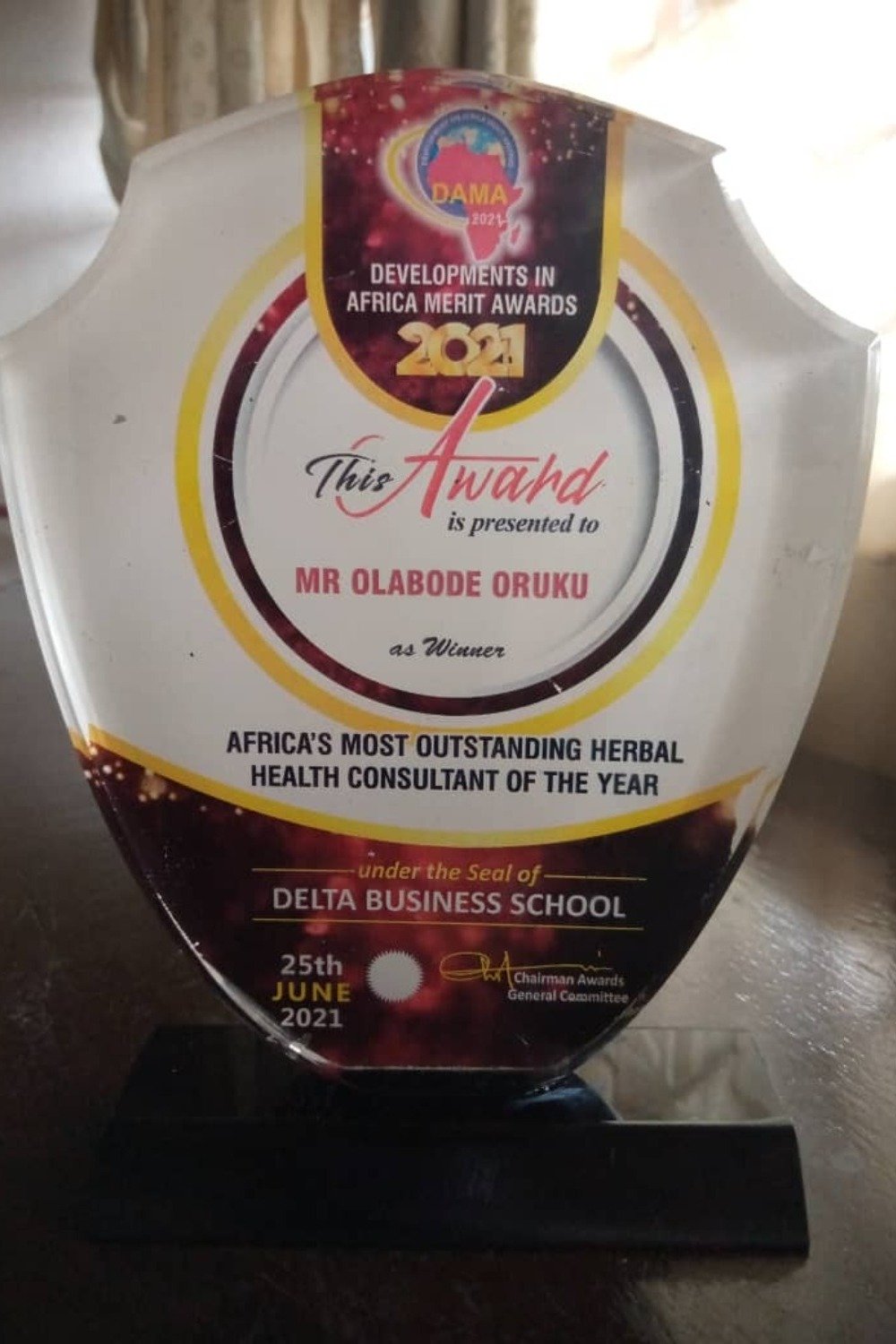
Oruku Alternative Healthcare in Lagos, Nigeria. He was honored as
Africa’s Most Outstanding Herbal Health Consultant of the Year
(Delta Business School – 25 June 2021).
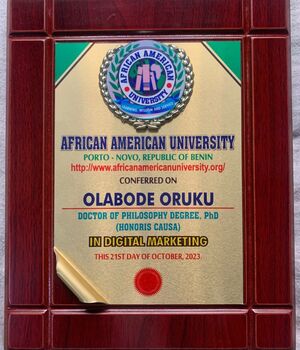
He also received an Honorary PhD in Digital Marketing from Africa
American University on 21 October 2023, for his contributions to
digital marketing education and entrepreneurship training.
Through NigeriaWebSuccess.com, he shares educational resources on
natural health, preventive wellness, and personal development.
Get Practical Health & Business Growth Tips
Join the NigeriaWebSuccess newsletter for practical health, wellness, health business, SEO, digital marketing, and AI growth insights designed for Nigerians.
Return to Nigeriaweb Success Home Page
EDUCATIONAL Mission Statement:
Our mission is to educate and empower individuals with practical knowledge about health, wellness, healthy lifestyle choices, preventive health practices, natural wellness strategies, and health business development—while providing the digital marketing and AI knowledge needed to build, grow, and sustain successful health-related ventures.
Join 1,500+ Nigerian Health Practitioners learning how to attract more patients, build authority, and increase income online.
Africa's Most Outstanding Herbal Health Consultant of the Year 2021

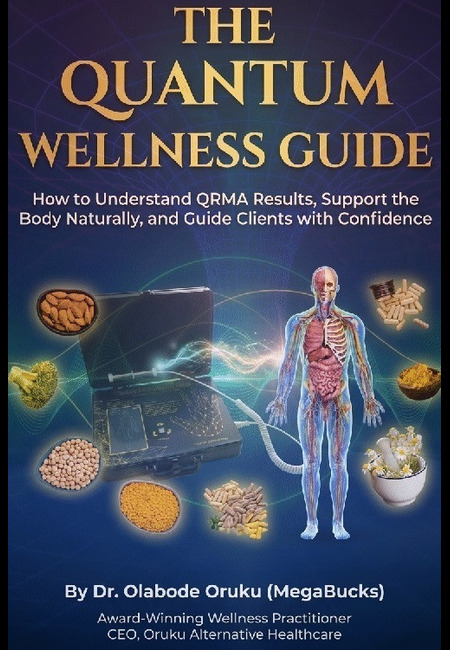

Download the FREE First Module
